
Home
- Treatments
Personalised Treatments for Better Healing
Treatments
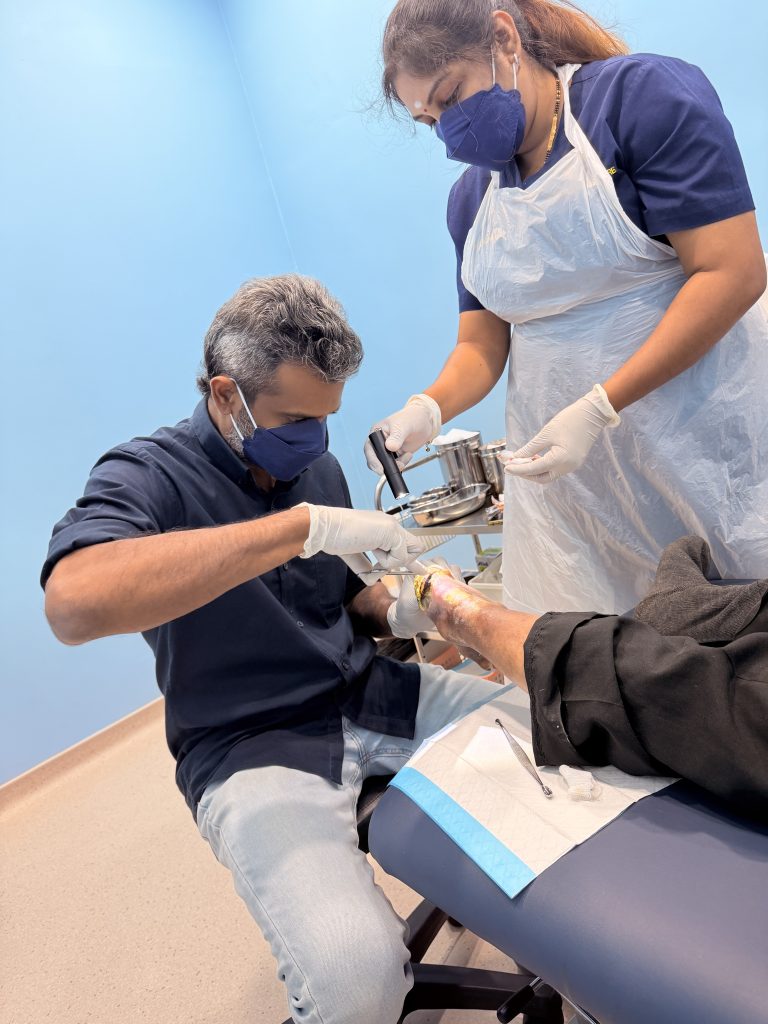
1. Hyperbaric Oxygen Therapy (HBOT)
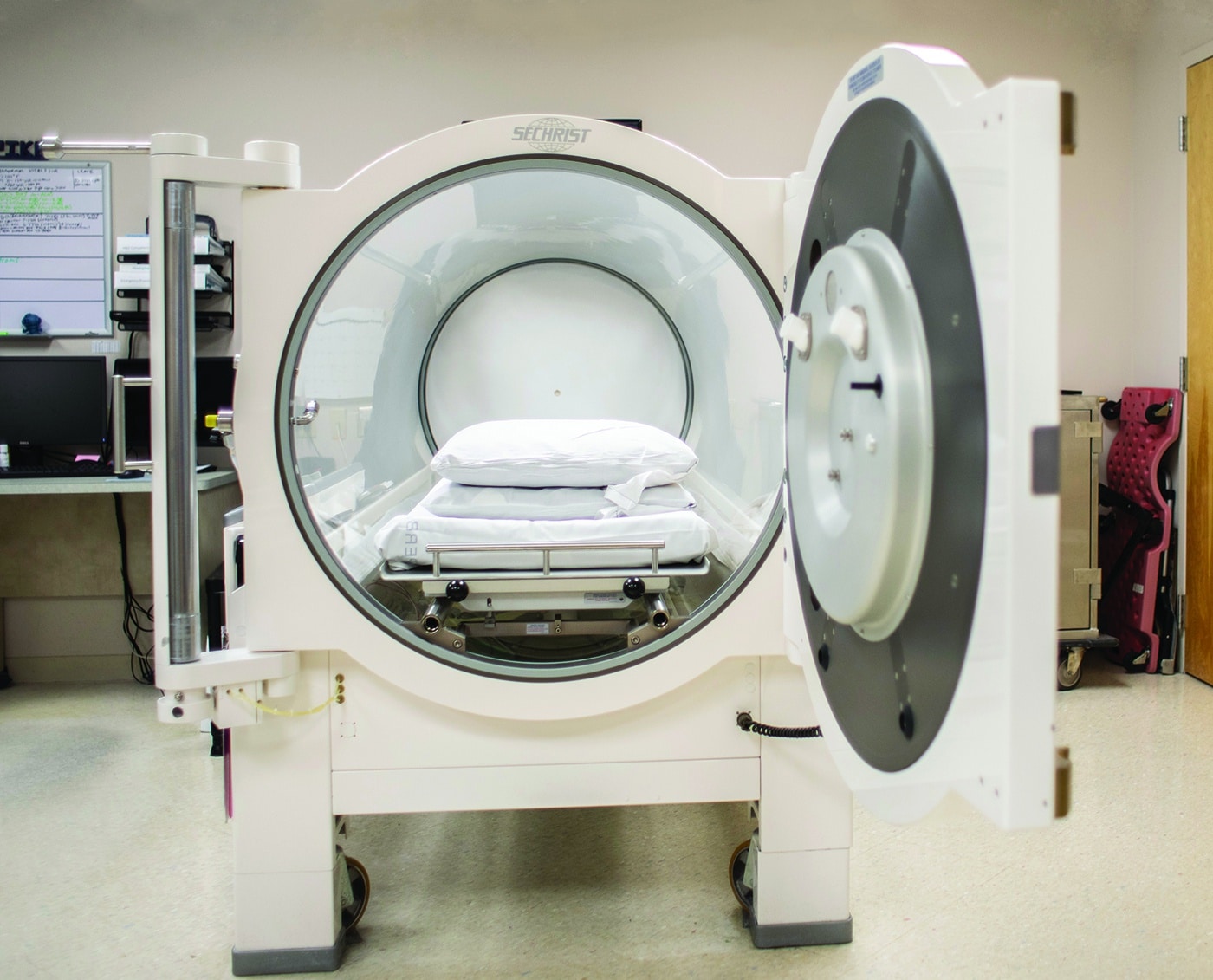
How HBOT Works
- Oxygen dissolves more efficiently into the blood plasma
- This oxygen-rich blood travels to tissues throughout the body
- It helps repair damaged tissue, reduce swelling, and fight infection
Key Benefits of HBOT
Enhances Wound Healing
Helps Fight Infections
Improves Tissue Repair/ Regeneration
Reduces Inflammation
and Swelling
Improves Circulation
Supports Cellular Energy Production
Approved Medical Uses
- Diabetic foot ulcers
- Chronic non-healing wounds
- Carbon monoxide poisoning
- Decompression sickness (divers)
- Radiation injury
- Gas gangrene and severe infections
Potential Wellness Benefits
- Anti-aging / skin rejuvenation
- Sports recovery
- Brain injury recovery
- Chronic fatigue
- Recovery after surgery
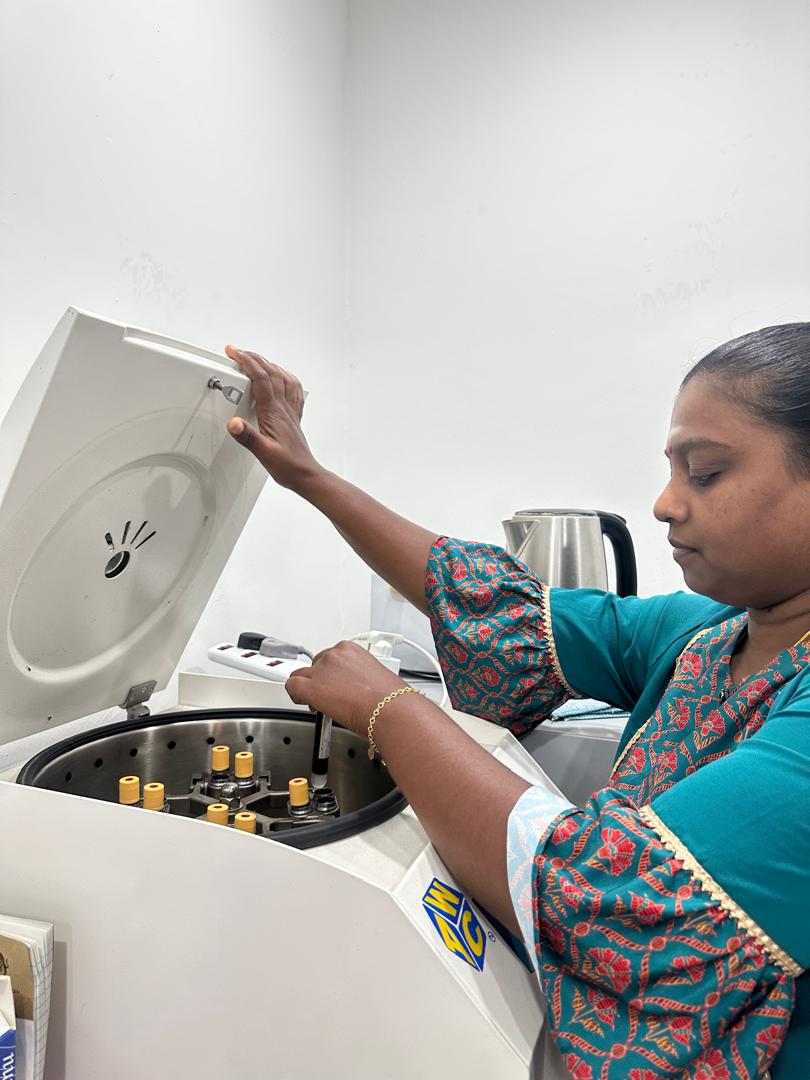
2. Platelet Rich Plasma (PRP)
Key Benefits of PRP
1. Accelerates Healing
2. Enhances Skin Rejuvenation
3. Reduces Chronic Pain & Inflammation
4. Supports Wound Healing
3. 4- Layer Bandage
4- Layer Bandage is a specialized type of compression dressing commonly used for managing venous leg ulcers, chronic venous insufficiency, and sometimes lymphedema. It’s called “4-layer” because it consists of four distinct layers, each with a specific function:
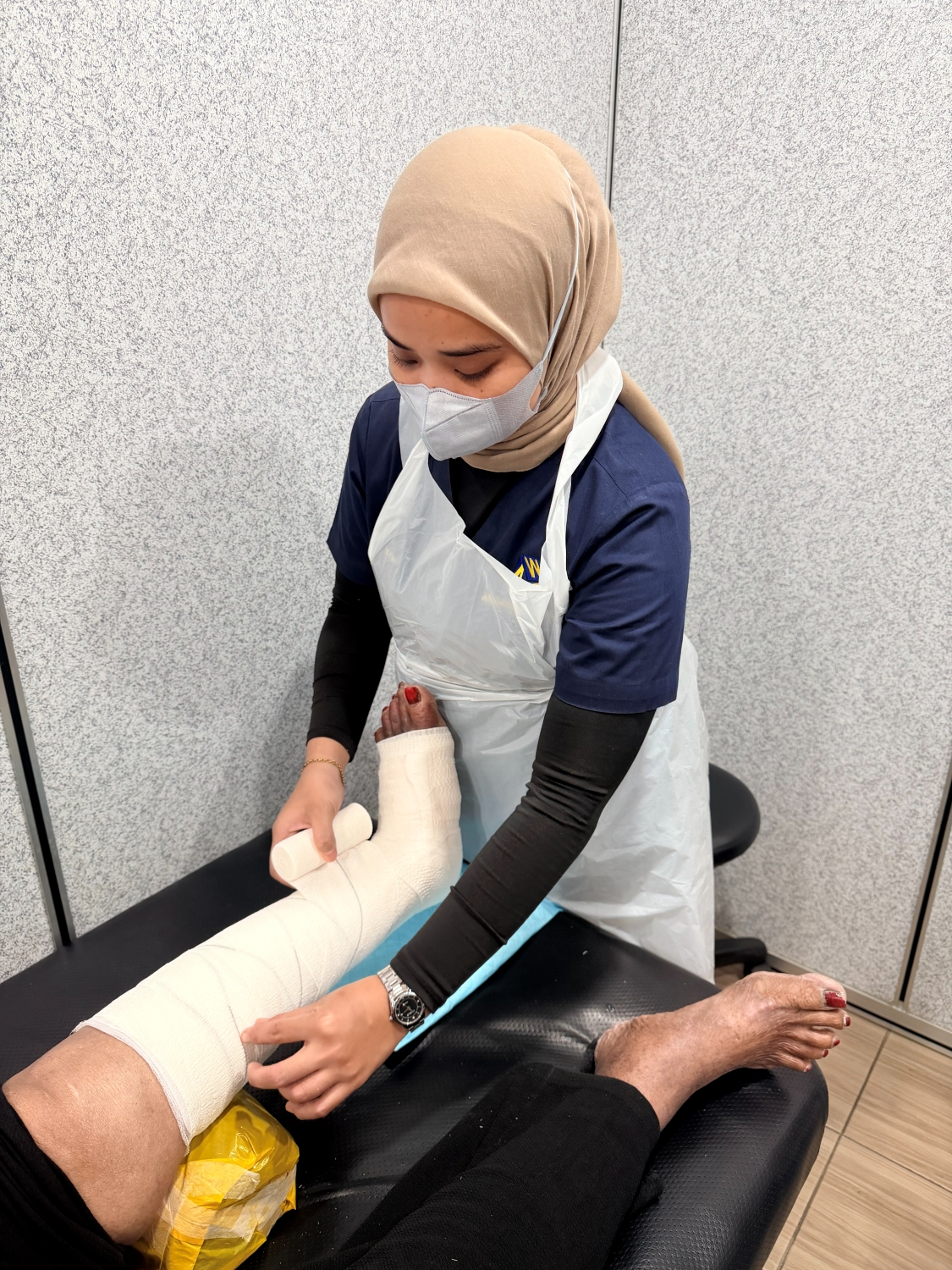
Layers & Their Functions
- Inner Layer (Contact Layer):
- Soft, absorbent padding that sits directly on the wound.
- Protects the skin and manages exudate (fluid from the wound).
- Second Layer (Absorbent Layer):
- Provides additional absorption and helps distribute pressure evenly.
- Third Layer (Elastic Layer):
- Provides sustained compression.
- Helps reduce swelling and improves venous return.
- Outer Layer (Cohesive/Retention Layer):
- Holds the entire dressing in place.
- Provides durable, long-lasting compression and protection.
Key Benefits of 4 Layer Bandage
1. Effective Compression:
Helps improve blood flow in veins, reducing swelling and promoting healing of venous ulcers.
2. Multi-layer Support:
Combines padding, absorption, and compression for both wound care and edema management.
3. Long-Lasting:
Can remain in place for several days, reducing dressing changes and discomfort.
4. Even Pressure Distribution:
Reduces risk of pressure sores by avoiding uneven compression.
5. Versatile:
Can be used for chronic venous ulcers, post-surgical edema and sometimes minor lymphedema.
4. Photobiomodulation
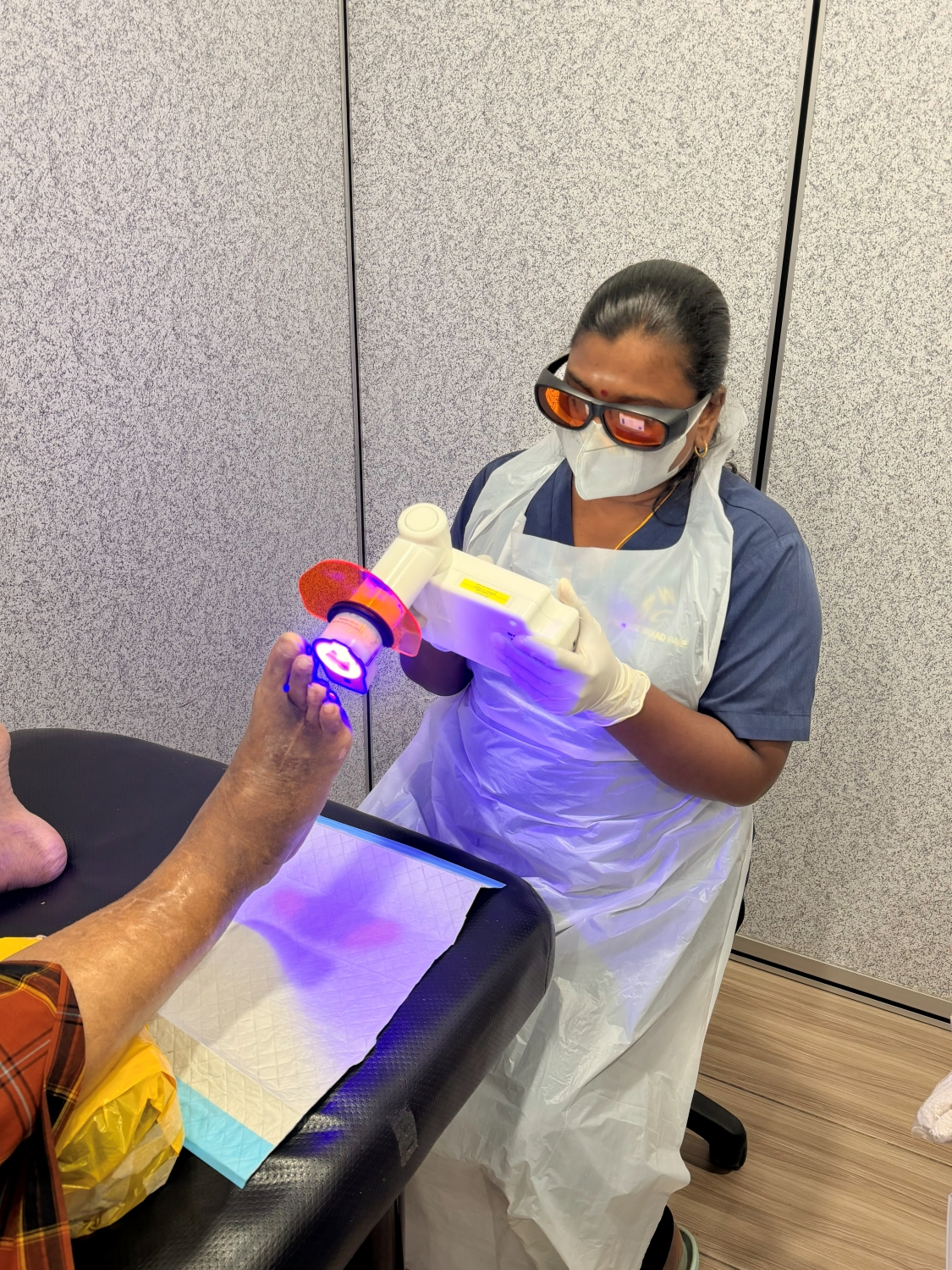
How Blue Light Helps Wounds Heal
Antibacterial Effect
Blue light can kill or reduce bacteria commonly found in wounds. This helps lower the risk of infection.
Cell Stimulation
The light stimulates skin cells that are involved in repairing damaged tissue, helping wounds heal more quickly.
Anti-inflammatory Effect
Blue light can reduce inflammation around the wound, creating a better environment for healing.
Improved Oxygen Supply
It may improve blood circulation, allowing more oxygen and nutrients to reach the wound, which helps speed up recovery.
Key Benefits of Photobiomodulation Therapy
Non-invasive treatment
No injections or
surgery required
Little to no discomfort
during treatment
Low risk of complications
Supports faster wound healing
May reduce bacteria
in wounds
5. Stem Cells and Exosome Injections
Stem cell injections and exosomes therapy are an advanced regenerative treatment used to support the healing of difficult or chronic wounds. Stem cells have the unique ability to transform into different types of specialized cells and release healing signals that stimulate the body’s natural repair processes, whereas exosomes which are the tiny, natural particles released by stem cells, carry growth factors and healing signals to damaged tissue. In wound therapy, these cells are typically injected directly into or around the wound site to promote tissue regeneration and accelerate healing.
Key Benefits of Stem Cell Therapy & Exosomes Therapy in Wound Healing
1. Accelerated Healing
2. Reduced Scar Formation
3. Enhanced Angiogenesis (new blood vessel formation)
4. Treatment of Chronic and Hard-to-Heal Wounds
5. Anti-Inflammatory Effects
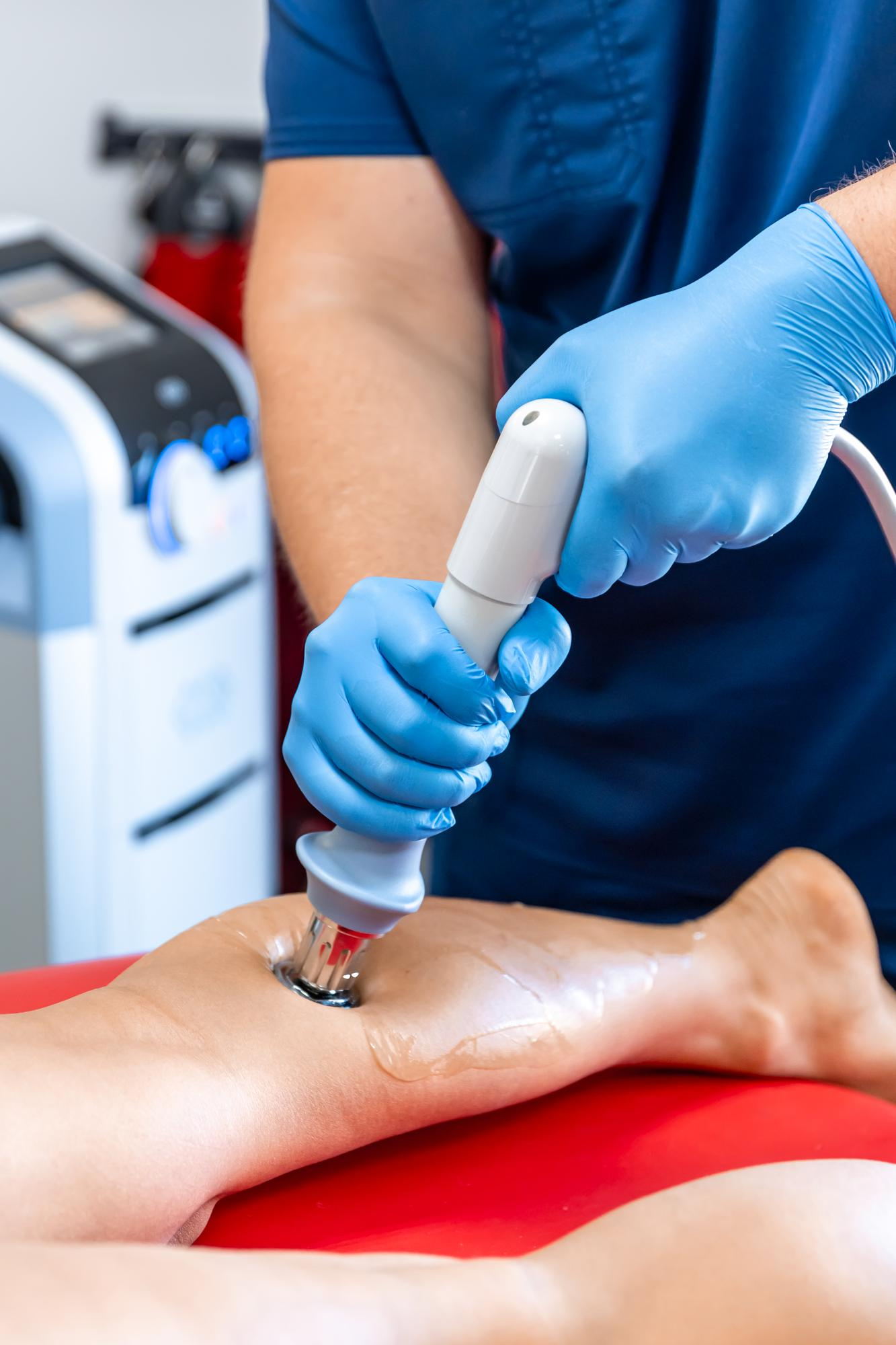
6. Extracorporeal Shock Wave Therapy (ESWT)
Key Benefits of ESWT
1. Improves blood flow (angiogenesis)
2. Promotes tissue regeneration
3. Reduces inflammation
4. Stimulates growth factors
5. Enhances cell proliferation
6. Pain reduction
7. Improves microcirculation
8. Reduces infection risk indirectly
7. Microcurrent Therapy
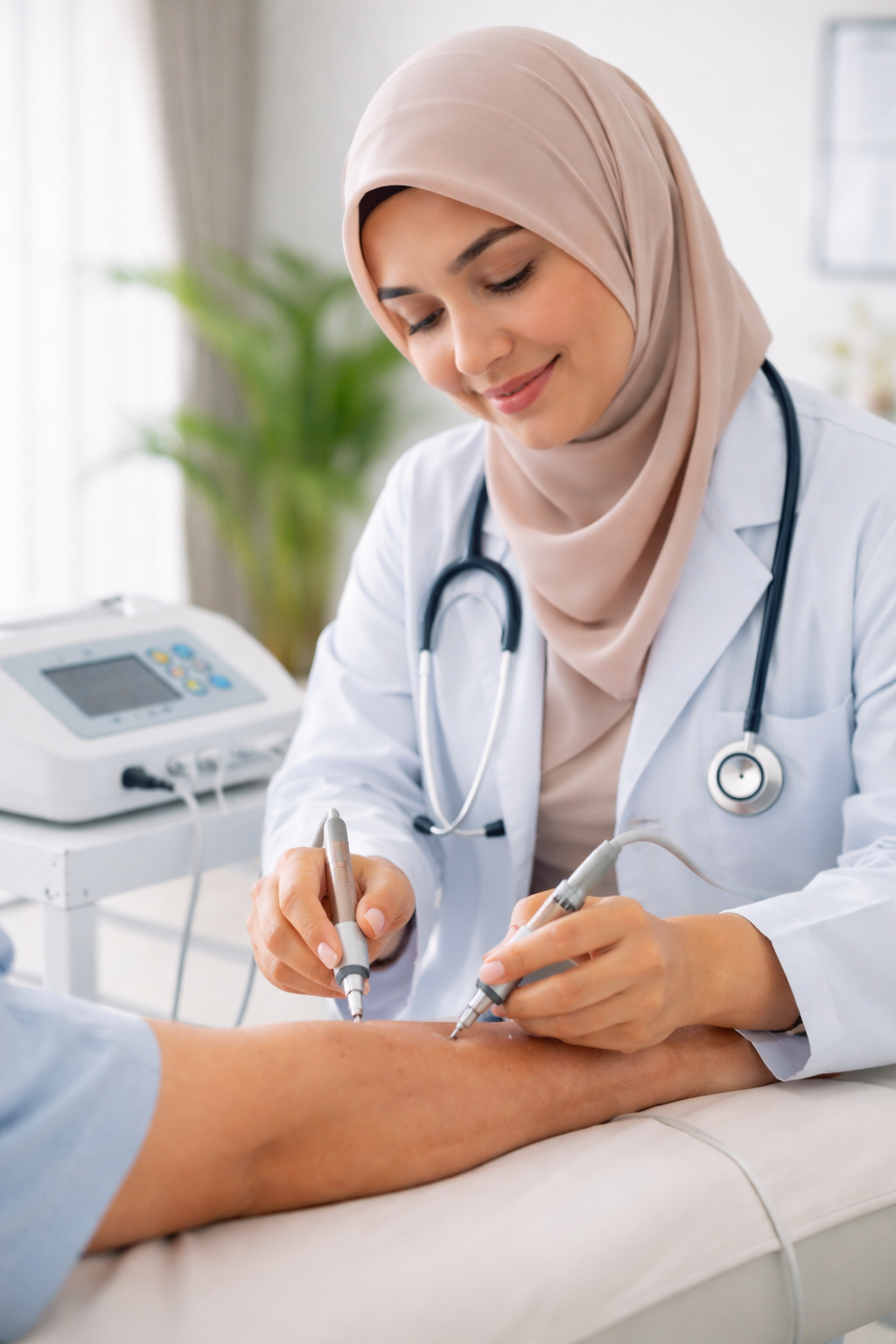
How it works
Key Effects:
- Enhances cellular energy (ATP production)
- Promotes protein synthesis and cell repair
- Improves blood circulation
- Reduces inflammation
- Supports migration of key repair cells (like fibroblasts and keratinocytes)
8. Negative Pressure Wound Therapy
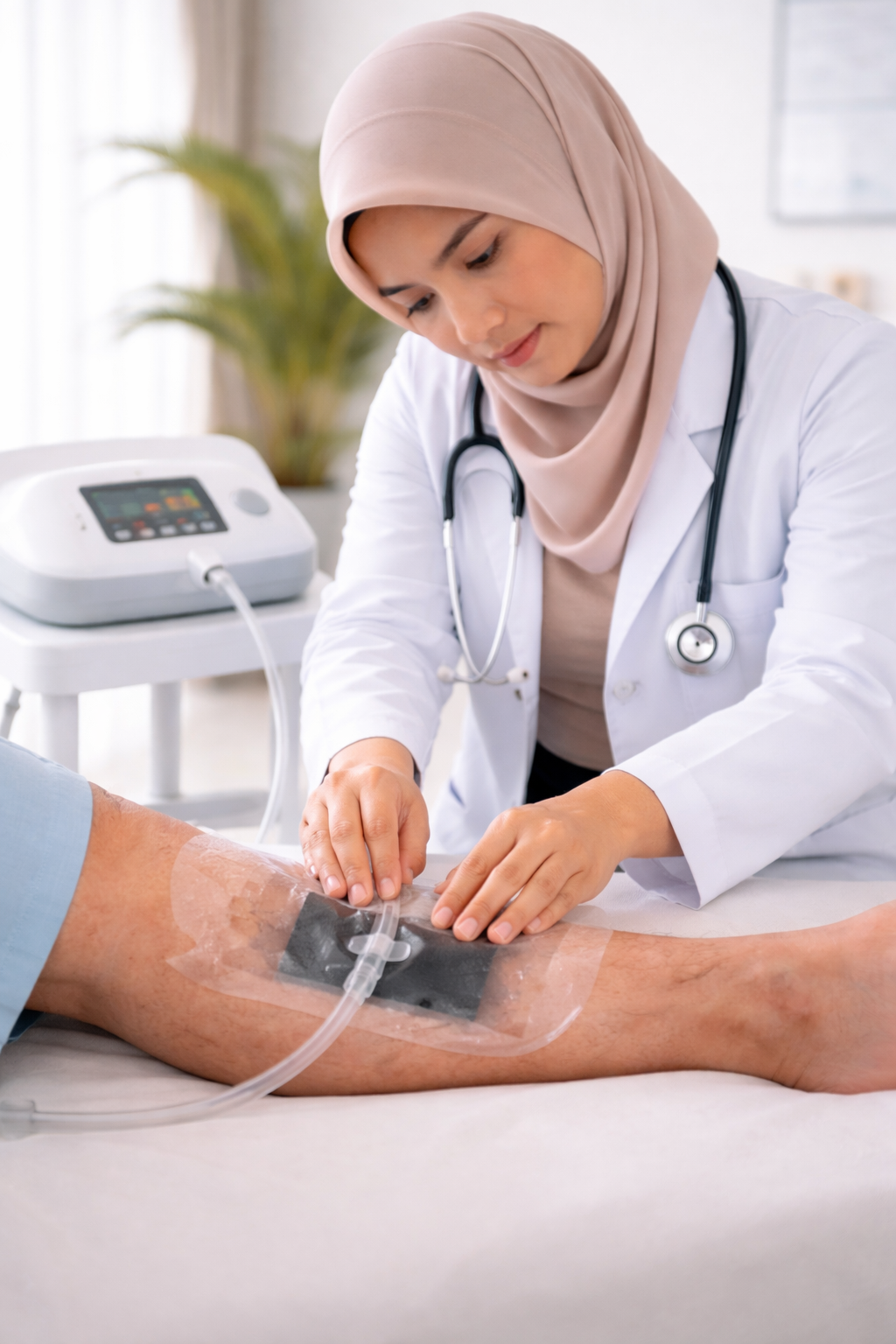
How it works
- A foam or gauze dressing placed inside the wound
- A sealed adhesive film covering the area
- A tube connected to a vacuum pump
- Removes excess fluid and infectious material
- Pulls the wound edges closer together
- Improves blood flow to the area